
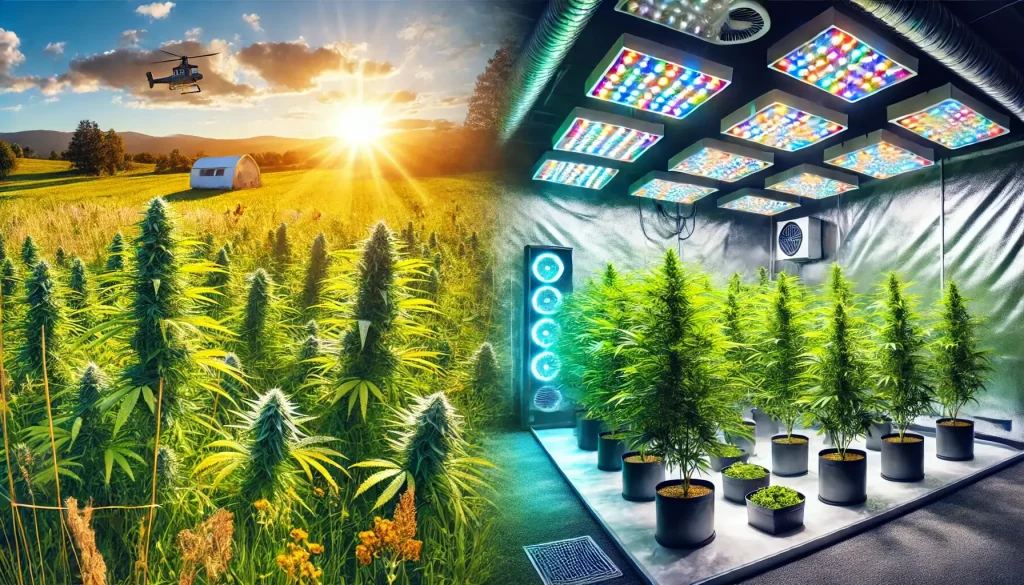
The world of growing marijuana can seem overwhelming at first, but don’t worry – it’s easier than you think! Whether you prefer the freedom of outdoor growing or the precision of indoor growing, each method has its advantages. Throughout this article, I’ll guide you step by step so you can grow your marijuana plants efficiently and achieve great harvests.
How to grow marijuana outdoors?
Outdoor growing is one of the most natural and economical ways to grow cannabis. All you need is a good climate, quality marijuana seeds and a little patience. The advantages are clear: cannabis plants grow bigger and usually give higher yields. However, the biggest challenge is the weather.
Keys to outdoor cultivation:
- Choose a place with good sun exposure.
- Plant in well-drained soil.
- Control pests organically to avoid contaminating your cannabis crop.
Remember that growing marijuana outdoors takes time and patience, but if you follow these steps, you’ll get an abundant harvest.
How to grow indoors: Step-by-step guide
If you live somewhere with an unreliable climate or simply want more control, indoor growing is the ideal option. Here, everything is up to you: from light to ventilation and nutrients. To get started, you’ll need grow tents that let you adjust all these factors to your liking.
Key steps for indoor cultivation:
- Choose a good growing space with enough ventilation.
- Install suitable lights for the growth of your cannabis plants.
- Control the temperature and humidity to avoid problems.
- Use fertilisers rich in phosphorus and potassium during the flowering stage.
Growing marijuana indoors gives you total control over the environment, which translates into healthier plants and more predictable harvests.
Which marijuana plant to choose for which type of cultivation?
Choosing the right marijuana plant is crucial. Not all strains do well in both outdoor and indoor growing. Some marijuana strains are more resistant to cold or heat, while others are better suited to indoor growing.
Recommended varieties:
Sativas:
- Main characteristics: Sativa plants are known for their large size and elongated structure. Their growth is vigorous and they reach considerable heights, so they need plenty of space to develop properly.
- Ideal for outdoor growing: Because of their size and need for plenty of space, sativa strains are perfect for outdoor growing. The unlimited space outdoors lets them grow freely, and their heat resistance makes them an excellent choice for warm, sunny climates.
- Added advantage: Although their flowering period is longer than that of other strains, sativas usually reward you with abundant harvests and more energising effects.
Indicas:
- Main characteristics: Indica plants are compact, shorter-growing and have a dense structure. They are ideal for small spaces thanks to their more manageable size.
- Perfect for indoor growing: As they don’t need as much space as sativas, indicas adapt perfectly to indoor growing. Their flowering cycle is shorter, allowing faster harvests.
- Additional advantage: Indicas tend to have a more relaxing effect, ideal for those seeking a more physical or sedative result from their consumption.
Hybrids:
- Main characteristics: Hybrids are a genetic mix of sativas and indicas, allowing them to combine the best of both worlds. Their characteristics vary depending on the specific cross.
- Versatility in growing: Thanks to their mixed genetics, hybrids can adapt to both outdoor and indoor growing. Some can have the heat resistance of sativas and the compact size of indicas, making them a versatile option for any kind of environment.
- Additional advantage: The combination of characteristics also allows for variability in effects, so you can find hybrids that offer a balance between energy and relaxation.
How many plants do we need for a successful cultivation?
This is a common question. The number of plants you need depends on your space and your goals. In general, for an indoor grow, you don’t need many plants to get good results. A couple of well-tended cannabis plants can produce more than you’d imagine. For outdoor growing, it all depends on how much space you have.
Recommendations:
- Indoors, 4 to 6 plants per square metre is a good amount.
- Outdoors, one or two large plants can occupy a considerable area.
How to choose the best cannabis seeds
Choosing the best marijuana seeds is essential to ensure a good crop. Here are some key points:
- Go for feminised seeds: Avoid male plants and make sure you get flowers.
- Check reliable seed banks: Guarantee quality genetics by buying from banks with a good reputation.
- Choose according to your needs:
- Autoflowering: Perfect if you're after speed and simplicity.
- Photoperiod: Ideal if you want to control the light and flowering cycle.

How to germinate seeds correctly
Germination is the crucial first step towards a healthy plant. Below are the two most common germination methods, both effective but with slight differences in how they’re carried out:
Wet paper method:
- Place the seeds between two damp papers (paper towels or napkins).
- Make sure the papers are well moistened, but not soaked.
- Place the whole in a dish or container, covering it to keep the moisture in.
- Place the seeds in a warm, dark place (such as a cupboard).
- Check the seeds daily, keeping the papers moist.
- In a few days, the seeds should start to germinate, showing small roots.
Direct germination in soil:
- Prepare a suitable substrate in a small pot or in the place where the plants will grow.
- Place the seeds directly into the soil, about 1 cm deep.
- Keep the soil moist but not waterlogged.
- Place the pot or planting area in a warm place.
- In a few days, the seedlings will start to emerge from the substrate if the humidity and temperature are right.
Growing cupboards: The ideal space for indoor cultivation
Grow tents are fundamental for indoor growing of marijuana, as they let you create a completely controlled environment where cannabis plants can grow in optimal conditions. These tents are specifically designed so you can adjust essential variables such as light, ventilation, temperature and humidity – factors that are crucial for the healthy development of the plants.
Advantages of grow tents:
- Total control over light: With a grow tent, you can regulate the light cycle the plants receive, which is vital for the different growth stages, especially the flowering stage.
- Better ventilation: Grow tents include ventilation systems that let fresh air in and hot air out, preventing the environment from becoming too humid or hot, which could have a negative effect on your cannabis crop.
- Temperature control: You can easily regulate the temperature inside the tent with heating or cooling systems according to what your plants need at any given time. This is especially useful for maintaining stability during winter or summer.
- Discretion and security: Grow tents are perfect if you’re looking for discretion, as they keep the grow out of sight and allow more precise control of smells and noise.
- Maximising space: If you have a small space, grow tents let you make the most of every available centimetre, adapting to different room sizes and needs.

The flowering period and stage in cannabis cultivation
The flowering stage is undoubtedly the most critical and exciting phase in cannabis growing, as it’s when the plants produce their prized flowers, also known as buds. This period marks the end of the vegetative life cycle and is when the plant starts to focus its energy on producing flowers, which is what is ultimately harvested.
The flowering period is triggered when the plants start to receive fewer hours of light, which happens naturally outdoors as the seasons change. In indoor growing, this process is controlled artificially by adjusting the lights to cut exposure to around 12 hours a day, simulating natural conditions.
To ensure successful flowering, it is essential to provide the right nutrients. The two most important nutrients in this phase are phosphorus and potassium:
- Phosphorus (P): This nutrient helps strengthen the roots and increase flower production. A phosphorus deficiency during flowering can result in smaller, weaker flowers.
- Potassium (K): Potassium is key to developing dense, healthy buds. It improves the plant's ability to process and distribute energy, which helps increase the quality and size of the flowers.
How to avoid over-watering and other common problems
One of the most common mistakes is overwatering. Too much water can suffocate the roots and reduce nutrient uptake, seriously affecting the plant’s health. Make sure the substrate is well drained and water only when necessary.
The best marijuana strains for indoor and outdoor use
Depending on your type of grow, you’ll want to choose the right marijuana strain. Some strains are more resistant to pests and diseases, while others flower faster or produce higher yields.
Best indoor varieties:
- Northern Lights
- White Widow
Best outdoor varieties:
- Durban Poison
- Super Silver Haze
Conclusions
Now that you know the keys to both outdoor and indoor growing, it’s time to get down to work. Whether you choose one method or the other, or even both, growing cannabis is a rewarding experience that will let you enjoy your own harvests. If you’re looking for more information, tips or simply want to join a community passionate about cannabis, click here and join our cannabis social club in Barcelona!
You may also be interested in
- Find out what Cannabinoids are
- Films and Series to Watch When High
- What is 420 and why is it key in a cannabis club?
Want to get to know us? Discover our cannabis association in Barcelona, see how to get to the club and contact us to request your invitation. Access for members aged 18 and over only.